Stemble’s Learnings
November 2026
Product updates, educational design inspiration, education research, and news for STEM educators.
Welcome to the November edition of the Stemble newsletter! We’re educators ourselves, and our goal is to always be learning alongside the community. In this issue, we’re sharing new Stemble features that improve consistency and STEM formula editing; a new blog post on vignette-style chemistry questions; and research into AI guardrails and teaching analytics.
-
Product Updates
Each month, we’ll include some updates on new features and fixes. If you have any questions about how these work with your course, don’t hesitate to get in touch!
More Robust Testing for Automated Grading
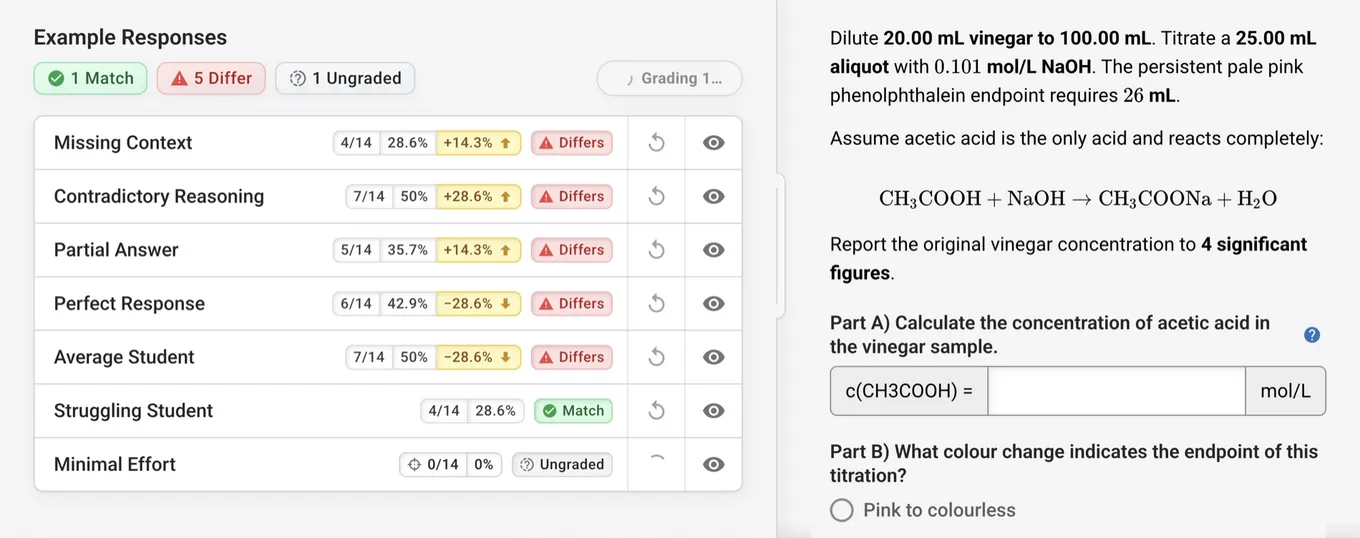
If you’re building content with automated grading, you can now save example responses and grade them against a task before it goes out to students. Try a strong answer, a weak one, or a common mistake to check that the grading and feedback work the way you expect. It’s an easy way to more seamlessly pressure test the task before it gets used by your class.
Easier Math and Chemistry Editing
Math formulas now open in their own editor, so writing and fixing equations takes less effort. Chemistry formulas stay intact while you edit, you can insert LaTeX into rich-text fields, and moving your cursor around inline math is more reliable.
-
From the Design Desk
Lessons from Stemble’s Instructional Design team
Chemistry with a Story: Bringing Clinical Vignettes into the Lab
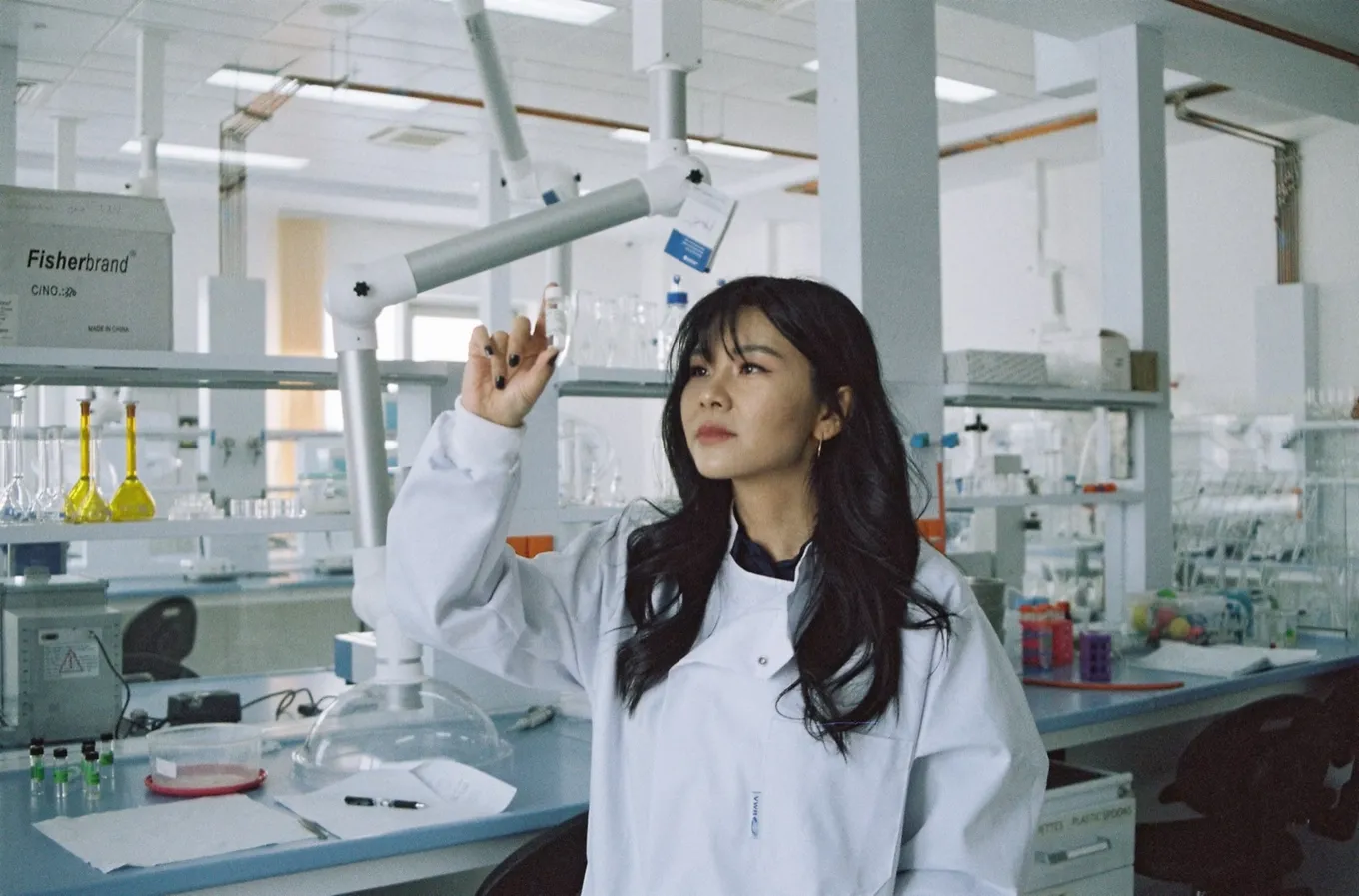
Read more here.In psychology and medicine, students practice clinical reasoning with vignettes: short, realistic scenarios that ask them to interpret and solve the problem using skills that they’re learning in their course. Noah, a course designer at Stemble with a background in psychology, has been bringing that format into chemistry. Instead of a standalone calculation, a vignette puts students in a role, hands them data to work through, and asks them to make a call and explain their reasoning. Read more about how that approach helps students see chemistry as a relevant skill used to make real-world decisions.
-
Research Highlights
Education research informs how we design learning experiences, support instructors, and work toward better student outcomes. Each month, we’ll highlight articles from the Stemble community and the broader field of education research that have us excited, asking questions, or thinking differently.
A Rubric for Checking AI Feedback
Can AI feedback on student writing be trusted? This article from the Journal of Microbiology & Biology Education offers a rubric instructors can use to evaluate GenAI-generated feedback before bringing it into their courses. The authors treat AI as a supplement to instructor feedback: an extra round of critique and revision, which is hard to provide in large courses with limited support. The article highlights that AI feedback is only as good as the standards we set.
Read the articleRankins, D. R., Tran, E. N., La, V. T., Huang, D. M., Barry, R. M., et al. (2026, June 16). A rubric to assess generative AI-based feedback on student writing assignments. Journal of Microbiology & Biology Education, 27(2).
From Assessment Data to Teaching Decisions
Chemistry education research has produced many validated assessment methods, but how do instructors actually use the data? In this study, researchers interviewed chemistry instructors as they explored visualizations of their own students’ responses. The authors note that time, interpretive support, and fit with existing teaching practice often stand between data and instructional action. This has us thinking about how we can best present course insights to make sure the data is immediately clear and actionable.
Read the articleKoevoets-Beach, C., Furr, O., & Balabanoff, M. (2026, August 21). Chemistry instructors’ interpretations of assessment instrument data for instructional action. Journal of Chemical Education, 103(9), 4828–4840.
-
News & Events
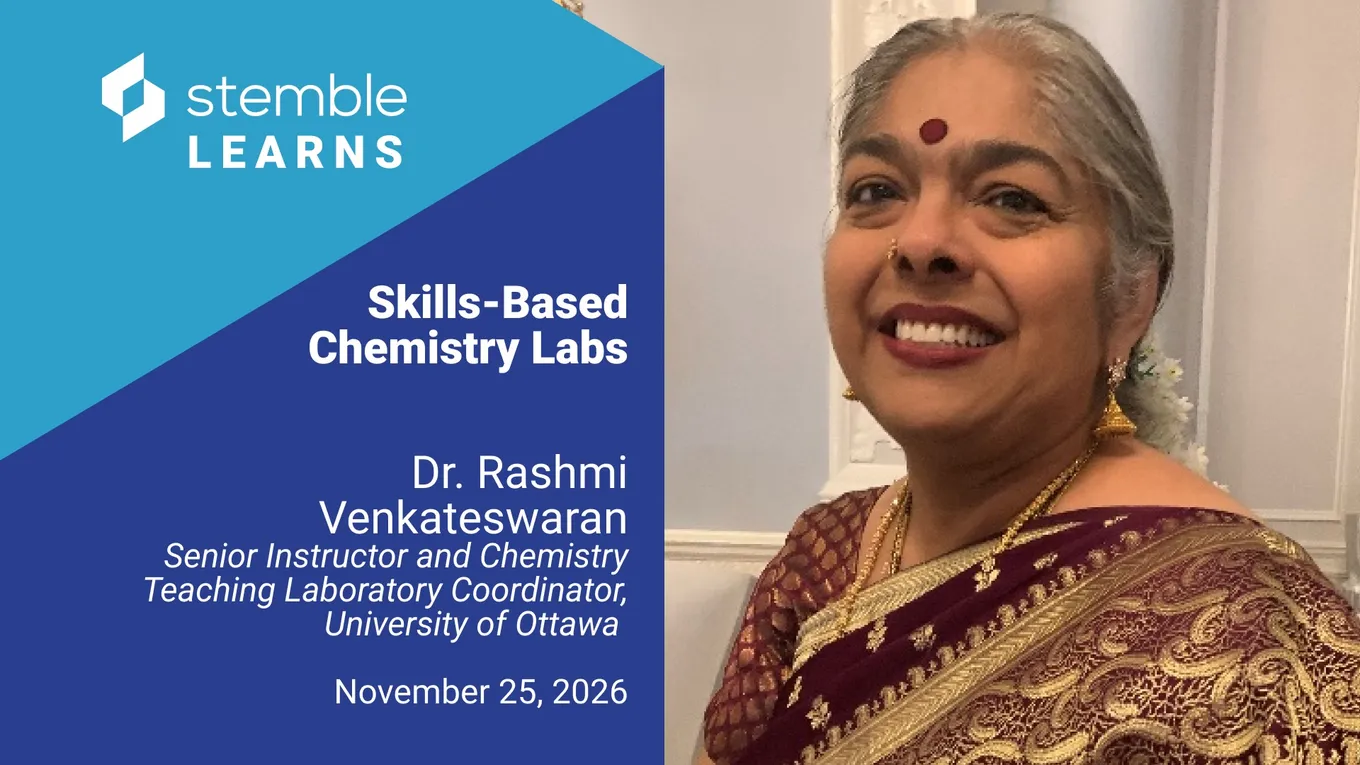
Stemble Learns with Dr. Rashmi Venkateswaran
Sign Up HereJoin us on Wednesday November 25 at 1pm EST for an engaging webinar featuring Rashmi Venkateswaran, Senior Instructor and Undergraduate Chemistry Laboratory Coordinator, University of Ottawa as she shares insights on Skills-Based Lab Design.
Catch Us at ABCChem
Dr. Jason Pearson, Stemble Founder, will be a panelist at the session “Innovative Strategies for Chemistry Education in an AI-Era” on Sunday, December 6, 2026 as part of ABCChem 2026 in Rio de Janeiro, Brazil. ABCChem offers an opportunity for top scientists from around the Atlantic Basin to share ideas and collaborate on current multi-disciplinary chemistry topics. Will you be at ABCChem? Let us know—we’d love to arrange a time for you to connect with Jason.

Thanks to the Ohio Network of College STEM Educators (ONCSE)!
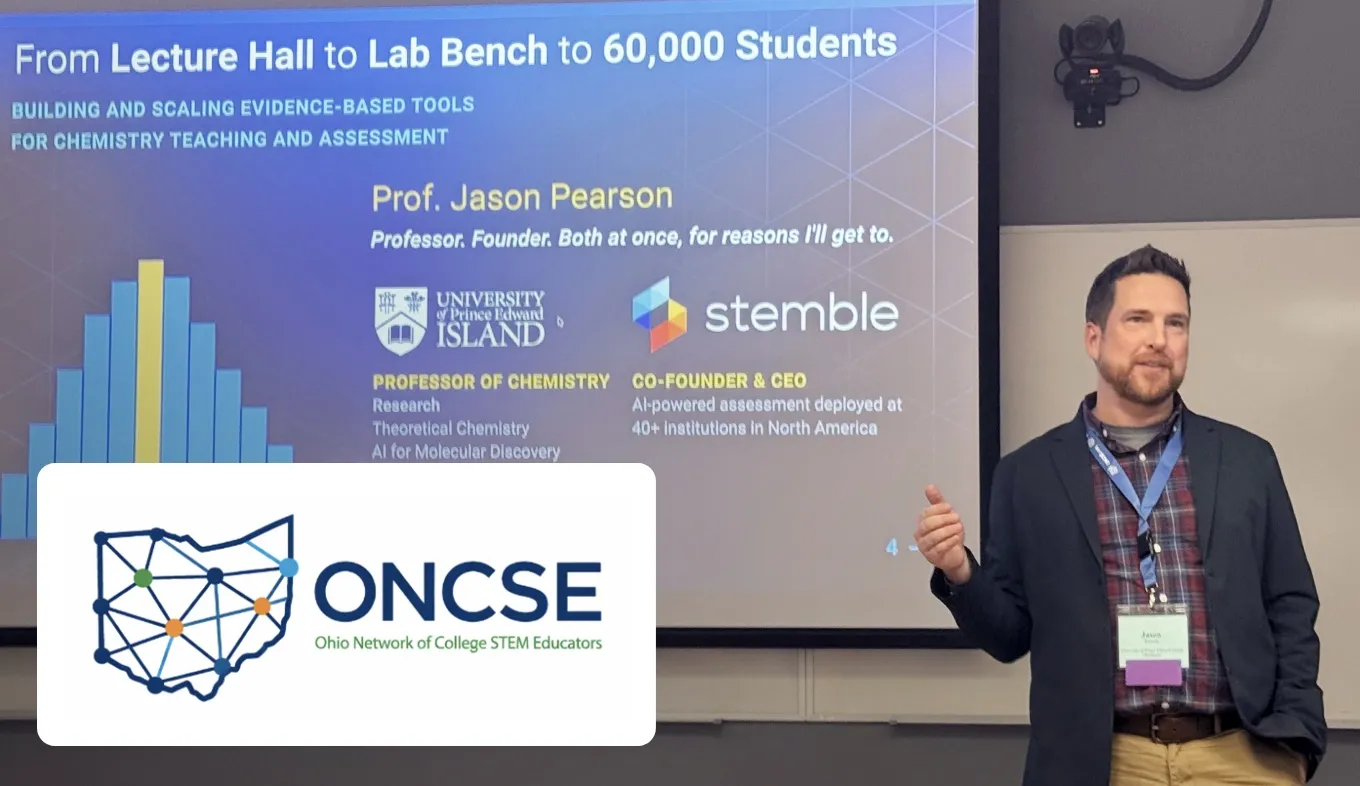
On October 31, Stemble founder Jason Pearson was invited to talk at the ONCSE Annual Education Conference. Jason’s talk, “From Lecture Hall to Lab Bench to 60,000 Students,” traced how a problem he encountered as a chemistry professor turned into Stemble: how do you monitor the overall health of your class when there are hundreds of them and only one of you? It was inspiring to be at an event with so many like-minded educators, all trying to improve the learning experience and student outcomes. Thanks to Ted Clark for the invitation and to The Ohio State University for hosting such a great event.
Interested in future issues?
Stay connected with ideas, tools, and news to support great teaching and learning.
Thank you for being part of the Stemble community.
Better insights. Better design. Better outcomes.